Most holiday budgets start with a number that feels right: last year’s total, a round $1,000, or whatever you hope to spend. The trouble is that a feeling doesn’t know when your paychecks land, what the trip will really cost, or how many small purchases happen between the first gift and the last dinner.
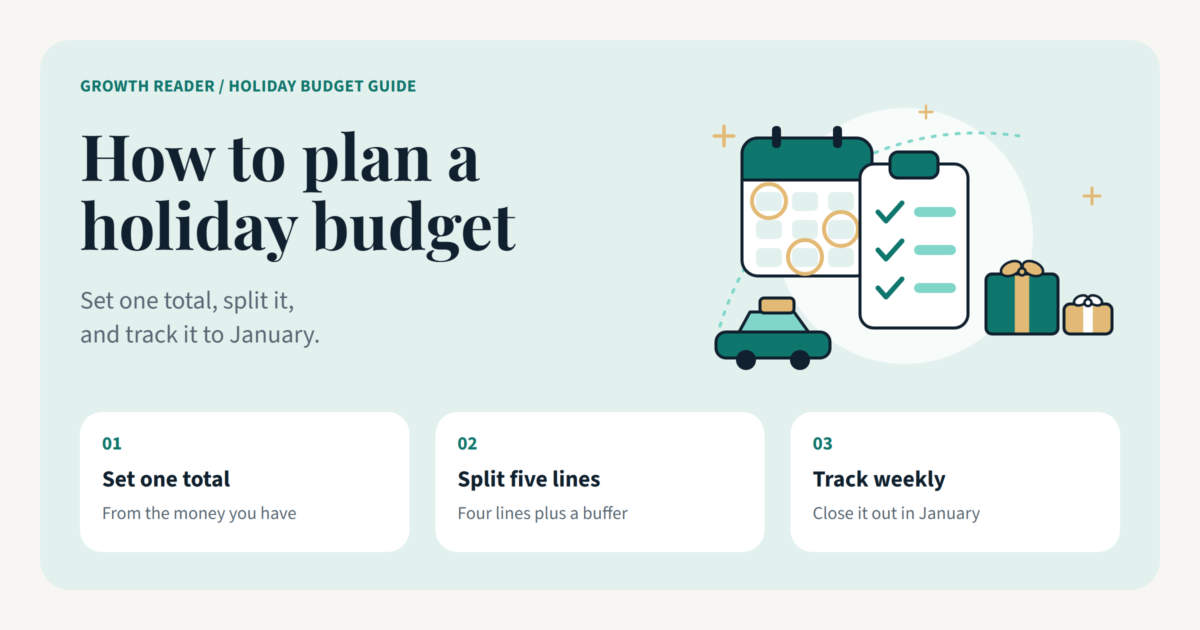
This guide shows you how to plan a holiday budget the other way round. You’ll start with the money you have and the paychecks still to come, split it across gifts, food and hosting, travel and the extras, and set up a short weekly check that keeps it on track until January. One example household runs through every step, so you can see the numbers work.
For context, in the National Retail Federation’s 2025 holiday survey, US shoppers planned to spend about $890 each on gifts, food, decorations and other seasonal items, with about $628 of that going to gifts (NRF, October 2025). That’s an average of what people planned, not a target. Your number should come from your own paychecks, and step 2 shows you how to find it.
What you’ll need: last season’s bank and card statements, your pay dates for the next few months, and about an hour for the first pass.
Step 1: Find out what last season really cost
Before you plan this season, find out what the last one cost. Not the amount you remember, but the amount your statements show.
Write down your guess first. Then open every account you used last November, December and January: checking, credit cards, store cards and any cash you remember taking out. Pick out each holiday purchase and sort it into four lines:
- Gifts: everything you gave, including exchanges, teachers and hosts.
- Travel: fares or gas, bags, parking, places to stay, pet care while you were away.
- Food and hosting: meals you cooked or hosted, food you brought to others, extra supplies.
- Celebrations and extras: decorations, cards, postage, shipping, wrapping, outings, events and outfits.
The costs that hide are usually small and spread out: shipping fees, a second roll of tape and paper, the extra grocery run, a parking garage, a last-minute gift card. They’re also the ones that make a guess run low. If your records are patchy, total what you can find and add a rough amount for cash.
Finally, note anything that was still owed in January. That’s often the part of the season people feel most.

Example
Dana and Marcus (an invented couple with one child) guessed last season cost about $1,200. Their statements showed $900 on gifts, $340 on travel, $380 on food and hosting and $260 on celebrations and extras: $1,880 in total.
Last season’s total isn’t a target. It’s a reality check you’ll compare against in step 3.
Step 2: Set a total from the money you have
A holiday total you can pay for comes from three numbers: what you’ve already saved for the holidays, what you can set aside from each paycheck, and how many paychecks arrive before you need the money.
Start with protected money. Before you count anything for the holidays, list what the holidays can’t touch: rent or mortgage, utilities, groceries, transport to work, insurance, childcare, at least the minimum payment on every debt, and your emergency savings. This list stays out of the plan, even in a busy December.
Find your set-aside amount. Look at your account balance just before each payday over the last two or three months. That leftover shows what usually remains after everything else is paid. Use one of the lower months, not your best one, and then choose a little less than that, so one unexpected bill doesn’t knock the plan over.
Count your paychecks left. On a calendar, count the paydays between now and the point when most of your holiday money goes out. For many people that’s mid-December. Leave January paychecks out. They arrive after the spending.
Then put it together on paper:

Formula
Holiday total = holiday money already saved + (set-aside amount × paychecks left)
Example
Dana and Marcus already have $300 saved. Before each payday they usually have $300 to $350 left, so they choose $250 as their set-aside amount. They have five paydays before mid-December. Their total is $300 + (5 × $250) = $1,550. That’s $330 less than last season, and the next step decides where the $330 comes from.
If your total feels small, keep it anyway and change what goes inside it. A smaller plan made of money you have usually feels better in January than a bigger one you can’t pay for.
Step 3: Split your holiday budget into five lines
A single total is easy to overspend, because each purchase looks small next to it. Splitting it into lines shows what each part of the season can cost. Use the four lines from step 1, plus one more, and write them down where you’ll see them, in a notebook or a holiday spending planner:
- Gifts
- Travel
- Food and hosting
- Celebrations and extras
- Buffer: a set amount for things you can’t predict yet, such as an extra guest, a price that goes up or a rush shipping fee.
Fill the lines in this order, because it puts the hardest-to-change costs first:
- Fixed costs. Travel you’ve committed to and gatherings you’ve agreed to host. If something isn’t booked yet, check today’s price, round up and write “estimate” next to it. A blank line counts as zero, and zero is the one amount it won’t be.
- Gifts. Flexible, because you choose the people and the amounts.
- Celebrations and extras. The most flexible line, and the easiest one to let grow.
- Buffer. Set it last, but keep it. We suggest about 10% of your total as a starting point, or a fixed $25 to $50 if your total is small.
If the lines add up to more than your total, make a quick keep, shrink, skip list of your usual traditions. Close the gap by shrinking something, skipping something, or changing a tradition (a name draw instead of gifts for every adult, a shared meal instead of hosting everything). Our list of ways to spend less on the holidays without feeling cheap has ideas for every line. Don’t close it by raising the total or deleting the buffer. A plan with no buffer has nowhere to put the first surprise.
Example
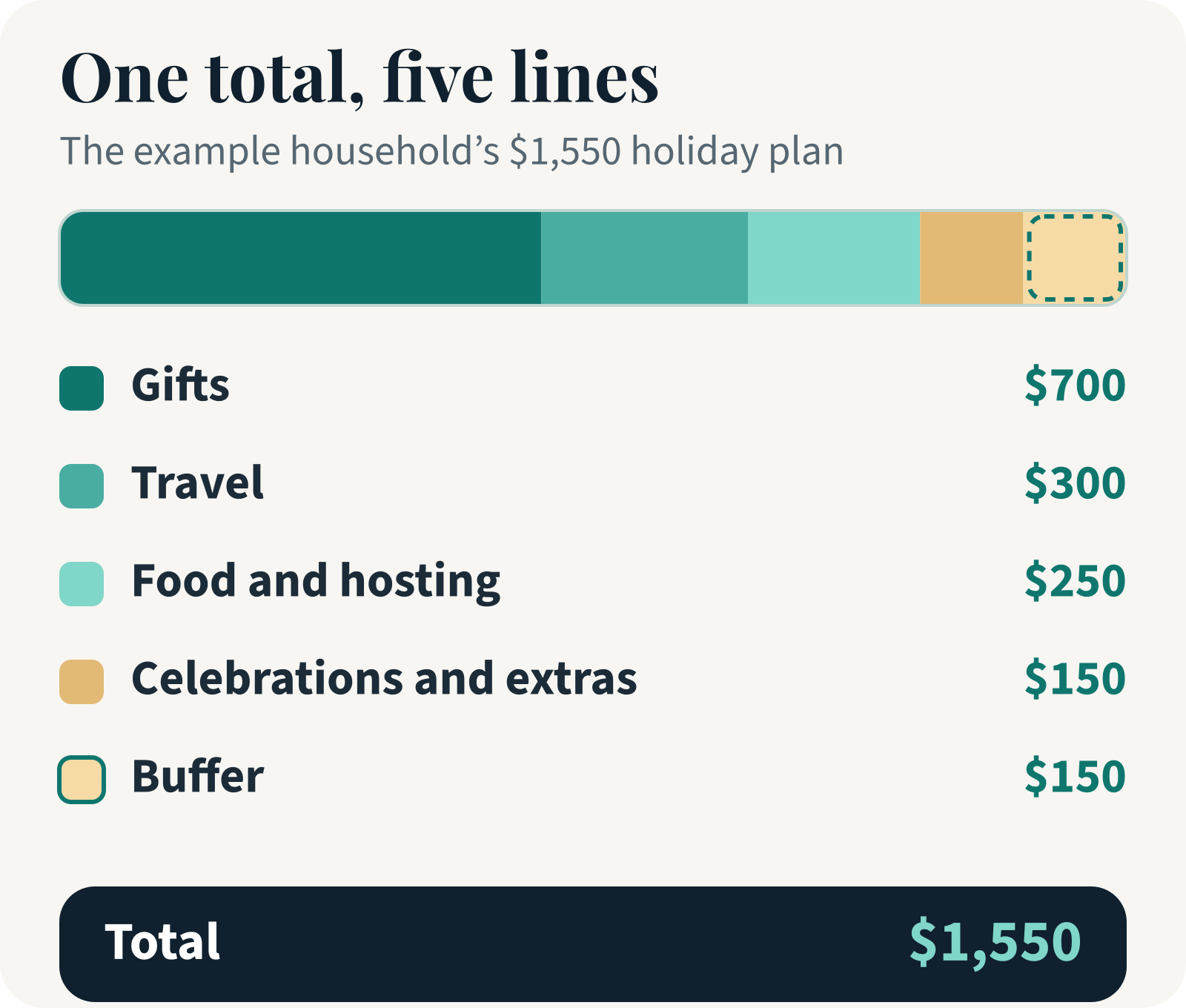
Dana and Marcus keep the drive to Marcus’s parents and the November dinner they love hosting. They shrink gifts for adults, cut back on new decorations and set a $150 buffer.
| Line | Last season | This season | Change |
|---|---|---|---|
| Gifts | $900 | $700 | −$200 |
| Travel | $340 | $300 | −$40 |
| Food and hosting | $380 | $250 | −$130 |
| Celebrations and extras | $260 | $150 | −$110 |
| Buffer | none | $150 | +$150 |
| Total | $1,880 | $1,550 | −$330 |
Step 4: Plan each line
Gifts
Give every person on your list an amount before you choose a single gift. Group people into tiers (closest people, close family and friends, wider family, thank-yous and hosts), give each tier an amount, and check that the list adds up to your gift line. Add one or two small spare gifts for surprises.
Dana and Marcus’s $700 covers 14 gifts. If you want a quick way to turn your gift line into amounts for each person, our guide to how much to spend on each person walks through it with a worked example.
Food and hosting
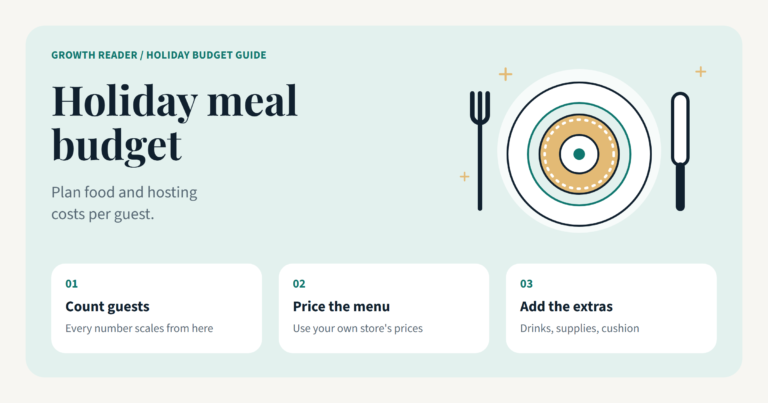
Turn the money for each gathering into a per-guest amount: the money for the meal divided by the number of guests. Dana and Marcus have $250 for a dinner for 10, so they have $25 a guest. That number also tells them what one more guest costs, which makes “can I bring a friend?” an easy question to answer.
Plan the menu to the number, not the other way round. Count drinks, disposables and the extra grocery run, which are easy to forget. If guests offer to bring something, give them a specific dish. Food you bring to someone else’s gathering belongs in this line too.
Travel
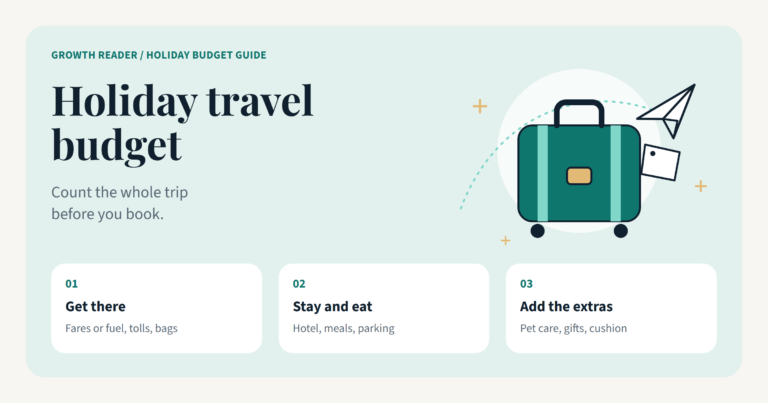
Price the whole trip, not just the ticket. A trip usually has more parts than the fare:
- getting there and back (fares or gas, bag fees, tolls)
- getting around at the other end (rides, parking, a rental car)
- a place to stay, and meals on travel days
- costs at home while you’re away (pet care, house help)
- any unpaid time off
If you’re choosing between options, such as driving or flying, or going on different dates, price both with every cost included. Then set a book-at price: the most you’ll pay. Book when the price is at or under it and the money is in your holiday account, then stop checking. Nobody can predict fares for certain, and a price you’ve already decided is good enough lets you stop watching.
Example
Dana and Marcus drive four hours to Marcus’s parents. Gas and tolls come to $110, one hotel night on the way is $120 and a pet sitter is $70: $300 for the whole trip.
Celebrations and extras
This is the line made of small purchases: decorations, cards, postage, shipping, wrapping, events, outings, a party outfit, holiday donations. Because each item is small, it grows quietly. Write a short list with an amount next to each item, and decide now which ones you’re keeping this year.
Step 5: Map your money by date
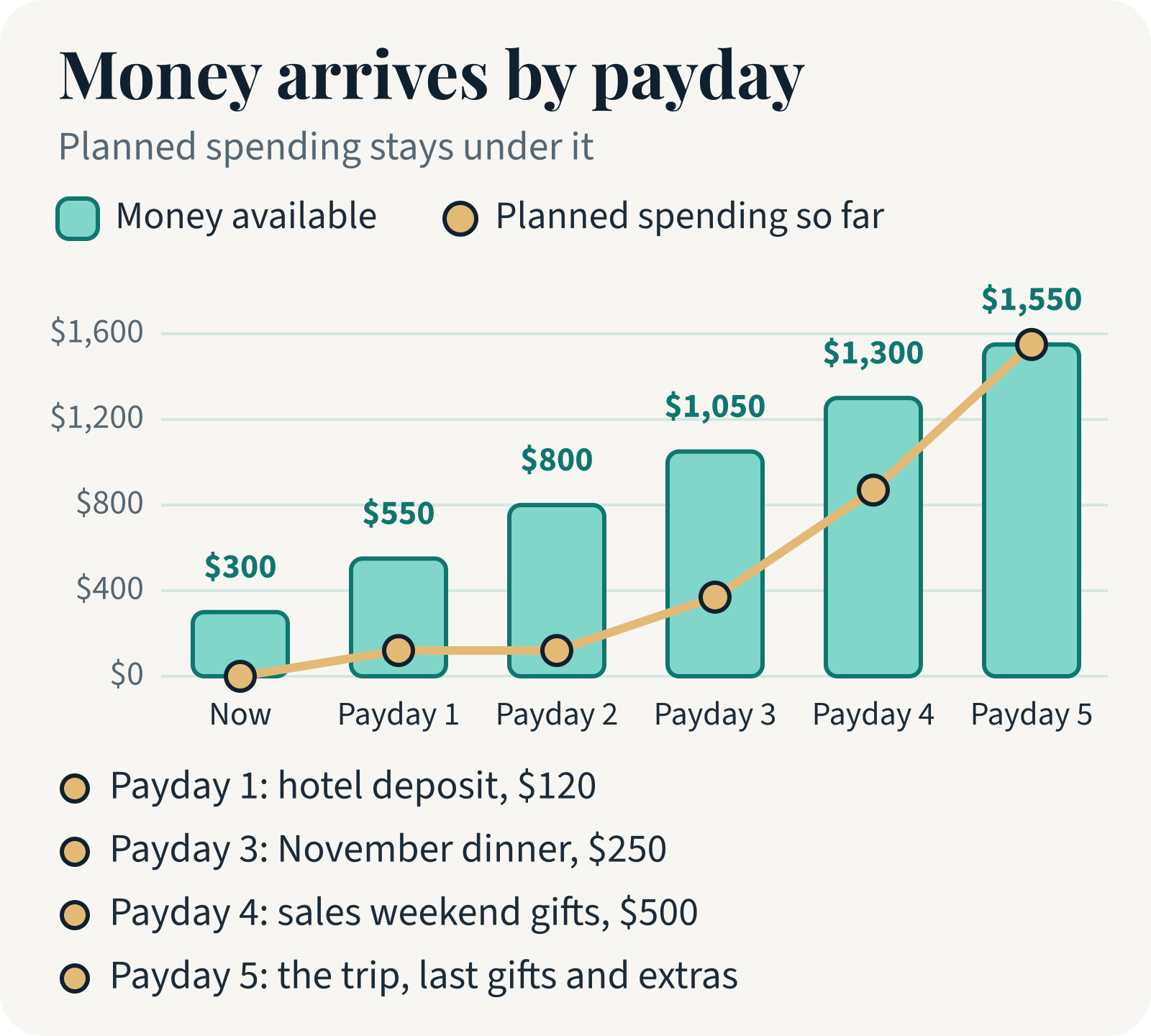
Your total is the amount you’ll have once every paycheck has arrived. Most holiday spending doesn’t wait that long. Many people start early: in the same NRF survey, 42% of shoppers planned to start before November. Hosting, travel deposits and the big sales weekend can all land before your last paychecks.
A money-by-date timeline shows how much holiday money you’ll have at each payday, next to what you expect to spend by then. Our free holiday budget calculator checks your planned costs and payment dates against your cash and planned transfers, and shows where the money runs short.
| Payday | Set aside | Available | Planned by then |
|---|---|---|---|
| Now | $300 | $300 | nothing yet |
| 1 | $250 | $550 | hotel deposit ($120) |
| 2 | $250 | $800 | nothing new |
| 3 | $250 | $1,050 | November dinner ($250) |
| 4 | $250 | $1,300 | big sales weekend gifts ($500) |
| 5 | $250 | $1,550 | the trip, last gifts and extras |
By the big sales weekend, Dana and Marcus will have $1,300 in their holiday account and will already have spent $370, so they’ll have $930 to work with, not $1,550. Their $500 of sale gifts fits.
If your biggest costs land before most of your money arrives, you have three choices: move a purchase later, pay for an early cost with money you’ve already saved, or shrink it. Seeing this in October is far easier than finding it out at the checkout.
Step 6: Decide how you’ll pay before you shop
Payment decisions made in a checkout line are rarely the ones you’d make at home. Make them now. Our ebook The Holiday Spending Plan gives this step a full chapter; here’s the short version.
Give the holiday money its own place. Money that sits in your everyday account tends to get spent on everyday things. A separate account, a savings “pocket” if your bank offers one, or a labeled envelope lets you see the holiday balance on its own. If you can, schedule a transfer for the morning each paycheck lands.
Write two or three payment rules. For example:
- “We pay for holiday costs from the holiday account, by debit or cash.”
- “If we use a credit card, we only charge what’s already in the holiday account, and we pay the full statement balance from it.”
- “No new store cards this season.”
Step 7: Track it weekly, then close it in January
A plan only works if you look at it. Pick one day a week and give it 15 minutes:
- Gather the week’s holiday purchases (receipts, card and bank apps) and record each one once, in a notes app, a spreadsheet or a holiday spending tracker.
- Add them to each line.
- Compare each line with its amount.
- Choose one action: fix something, move money, or do nothing.
Watch for three warning signs: a line that’s more than half spent with most of the season still to go, payments due before your next payday that are bigger than your holiday balance, and a buffer that’s shrinking fast.
When a line runs over, fix it in this order: use the buffer first, then shrink another line, then change a plan. Never take it from protected money, and don’t fix it with a new balance you didn’t plan.
Then, in early January, close the season in about half an hour:
- Compare planned and actual spending for each line.
- Finish returns, and make sure every holiday card balance has been paid as planned.
- Ask three questions: What worked? What surprised us? What will we keep, change or drop?
- Set next year’s number and a monthly amount: (next season’s total − money already set aside) ÷ months until the season starts.
Example
Dana and Marcus finish with $100 unspent and plan $1,600 for next season. They keep the $100 as a head start: ($1,600 − $100) ÷ 10 months = $150 a month, starting in February.
Adjust the plan to your situation
- Starting late. If it’s already December, build a short version in about an hour: protect your bills, write down what you’ve already spent, count the money left for the season, split it into gifts, extras and a small buffer, and set one check-in date. A short plan still beats no plan.
- Pay that changes month to month. Use one of your lower recent months for the set-aside amount. Count a bonus or extra shifts only once the money is in your account, then add it to the buffer or raise the total.
- Couples and shared households. Agree on one shared total, or a shared total for joint costs plus separate amounts for gifts to each other. Decide which before anyone shops.
- Other holidays and more than one celebration. The five lines work for any celebration at any time of year. Count your paychecks back from your own dates, and if you celebrate twice, give each celebration its own amount inside each line.
If money is already tight
If you’re behind on rent, utilities or minimum payments, the holiday plan comes second. Free, reputable help is available:
- US: the National Foundation for Credit Counseling is a nonprofit network of credit counseling agencies.
- UK: GOV.UK points people to MoneyHelper for free debt advice (GOV.UK).
- Canada: the Financial Consumer Agency of Canada explains how to choose a credit counselling agency.
- Australia: the National Debt Helpline offers free financial counselling on 1800 007 007.
Put your plan on paper
A holiday budget comes down to four habits: set a total from money you have, split it into five lines, track it once a week, and close it in January. You can do all of it in a notebook with the steps above, or keep the whole season in one place with the holiday spending bundle, which brings the ebook, the planner and the tracker together.
Related guides: Holiday Travel Budget: How to Count the Whole Trip Before You Book · Holiday Meal Budget: How to Plan Food and Hosting Costs Per Guest · Holiday Gift Budget: How Much to Spend Per Person · 25 Ways to Spend Less on the Holidays Without Feeling Cheap
This article is general information, not financial advice. See our Disclaimer. The household in the examples is invented, and its amounts are illustrations, not recommendations.